 Supercouple: Superman & Wonder Woman Why people think you can’t do both of these things baffles me. Why is it, that in 2013, we still think that in order for a woman to really love a man, it’s a requirement that she give up her independence or strength? I’m watching Beyonce’s “Next Chapter” and Oprah, who is a very modern woman, says to her: “You balance the fierce woman with obviously a woman who adores and loves her man,” as if one concept has anything to do with the other. When Destiny’s Child released “Cater 2 U” in 2004, so many cried out “Beyonce` was on ‘Independent Women,’ now she’s talking about catering to her man? She’s contradicting herself, she’s flipped the script!” Again, I wondered what the correlation was. How was Beyonce` relinquishing her individual power by singing about rewarding her partner for being a quality mate? Successful, self-sufficient men don’t get accused of being hypocrites if they’re dedicated to their mate. A last Beyonce` example, my father saw her video for “Run the World” and came charging in the room saying “Well, if girls run the world, what does she need Jay-Z for?” implying that Beyonce` would only be with Jay-Z because she needs him to do something. Maybe the divorce rate wouldn’t be as high if we stop approaching or viewing relationships as an exchange of services or roles; I’ll cook a meal and you’ll take out the trash, or as a form of imprisonment and submission.
Even some feminists perpetuate the notion that women can’t be both individually strong and devoted to their partner, as some have negative opinions of marriage and stay-at-home mothers. Stereotypes that “independent” women are selfish and incapable of giving their home-life proper attention and that housewives are weak pushovers both stem from our society’s painful history with gender politics.
The origins of the feminist movement began when a woman’s existence was limited to being a wife and mother, with little command over her own life or input in her marriage. That being said, marriage and home-life seemed to be a woman’s primary oppressor. Despite progress away from this tone, gender bias still affects relationships as we (men and women) struggle as a culture to shake free of our conditioning and former way of thinking. As we did then, we are still forcing women to choose and are missing the point. The movement wasn’t and isn’t about living an independent (or “fierce,” as Oprah put it) life versus a marital life. It’s about choices and freedom; the opportunity to choose either path or both and having freedom within such. A woman is not forfeiting her power in loving a man unless she loses her identity, defines herself by or allows herself to be disrespected or silenced in her relationship. Being true to oneself doesn’t prevent one from being able to love fully. Actually, if “fierceness” and loving are related at all, lack of it would hurt your relationship because as RuPaul says “If you can’t love yourself, how in the hell are you gonna love somebody else? Can I get an ‘Amen’?!”
Male or female, if your partner measures your love by how much you yield to or dim your light for them, then they don’t know what love is about. As cliché` as it may sound, your partner should always want the best for you (even if it’s not them) and encourage you to grow and shine your light as bright as you can. Instead of stifling or negating your voice, they should want to hear it and be considerate of how you think and feel. A caring partner isn’t going to look at your “fierceness” as an infringement on theirs; they’re going to love that ish and respect it. So yeah, Beyonce` can be Crazy, Dangerously & Still in Love (all song titles) with her man and be the Bootylicious, Independent Survivor (also all song titles) mega-entrepreneur-entertainer that she is. Blue Ivy in one hand, mic in the other, man beside her.
By C. Dyer, contributing writer
I'm not going to talk about morality in general, because I know everyone has their own understanding of what is acceptable behavior. Instead, I want to talk about personal morals.
Personal morals affect our daily interactions and are driven by the things we value. They should be fairly constant unless we have a moment of enlightenment and recognize we are doing wrong. It's a sign of growth when we change for the better. Unfortunately, changes are not always driven by hopes of self-betterment.Too often, popularity and money are the motivators behind our decisions. Who to hang out with, what to wear and how to act are drawn from the opinions of our family and social circles. We become so dependent on the approval of others that we begin to insidiously lose our own identity. Many celebrities and politicians struggle with balancing personal morals and popular approval. Sometimes they even reach a point where morals are no longer an individual code, just a suit to be worn and changed when the winds of majority opinion shift.
Abandoning personal morals to follow the majority can be dangerous, because sometimes the majority is very wrong. Slavery, segregation, and anti-Semitism were all supported by a majority at one point in time. If no one had held to their individual code and what they knew to be right, women wouldn't be able to vote and restaurants could still deny entrance based on skin color. It isn't enough to be satisfied with the status quo and shrug off injustices.
How much money would convince you to give up your code? Chances are there's a number. The reason is because money and power are valued more than nearly everything else. If this is true of yourself, it will eventually show through in your crumbling personal morals. Be true to your character and conscience. The world needs more genuine people.
"What good is it for someone to gain the whole world, and yet lose or forfeit their very self?"-Luke 9:25 (New International Version Bible)
J.Says’ Take: Some may view this article as presenting nothing new, but I think we all take it as a given that we don’t compromise or shape our moral views after others, when in reality, we do. All the time. We all care what people think, either on a small or large level. That’s why we clean up before someone comes over or feel the need to clear things up when we’re misinterpreted. Since we care what people think, this can easily affect how we set our moral standards or our honesty about how we set them. If we dare differentiate from what the seeming majority values, we just go find other people who share our feelings so we won’t feel judged. Take time to analyze your modes of operation.
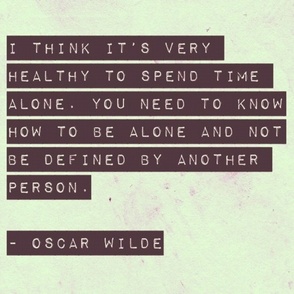
I have a theory that most people would have a healthier level of self-esteem and self-confidence if not for the remarks of others. Even the most secure people with the strongest sense of self can fall prey if it’s the right person speaking to them. After hanging out with a few pals (some single, some not), I noticed how antagonized, patronized and stigmatized single individuals are. They hear rude and intrusive comments on a regular basis.
In our society, especially if you’re of a certain age, it’s expected for you to either be in a relationship or actively seeking one. Emphasis on dating starts early; 1st graders are often asked “do you have a girlfriend/boyfriend?” That being said, forbid you’re completely single (or not sexually active) and maybe feel alright with that, it raises questions and eyebrows. It’s assumed that something is off with you-you’re socially awkward, a workaholic, afraid of commitment, jaded and have trust issues, promiscuous, purposely single or secretly gay. If you discuss relationships or someone’s relationship specifically and you say something seemingly unsupportive, you’re just jealous. For example, I have never been a fan of P.D.A. (public displays of affection). I think it’s inappropriate and a little impolite to suck face or fondle your mate in public. I don’t do it now, and I’m in a relationship. Nonetheless, when I was single and complained about a couple at a pool, I was told “Oh, you’re just mad because you don’t have someone to do that with.” I thought “Why do they think I’m jealous? Oh, yeah, I’m so jealous of all the frustration and crying fits you go through with your partner…” If not jealous, it’s presumed your quietly lonely, sad and want to be set-up. One friend told me people think they’re doing her a favor by constantly trying to set her up and don’t believe that she’s ok with her current single status.
 Singlehood sound so bad now? I think all these stereotypes and attitudes cause a fear or insecurity of singlehood and/or sexual abstinence (I mention abstinence because single men are often expected to be at least sleeping around). That fear sometimes leads people into romantic desperation; picking up relationships with whoever meets a bare minimum requirement instead of a solid, healthy match. Some of my girlfriends talk about singlehood like it’s a disease and they’ll die if they don’t find someone. I tell them all the time that if they relax a little and take the time to try and enjoy being single, there’s a lot to gain. You’d be surprised at the amount of emotional and personal growth one can experience, and how much singlehood can strengthen identity. These elements can actually help with dating as the root of many break-ups is individual emotional issues. So, if you’re in a relationship, don’t accuse your single friends of being dysfunctional, gay, jealous or lonely and if you’re single, don’t let the stereotypes get to you or affect your dating choices.
By C. Dyer, contributing writerNote: Articles written by contributing writers don't necessarily reflect the opinions of J.Says herself. The phrase "bi-partisan solutions" has come up a lot recently in reference to the fiscal cliff negotiations. Even at the current level of desperation, many politicians seem unable to consider compromise. This "my way or the highway" attitude is characteristic of most modern day politicians. I optimistically hope the United States is reaching a turning point in the way it approaches politics. George Washington belonged to neither the Democratic nor Republican party. In spite of this, the then fledgling country overwhelmingly supported his election and reelection. During his time in office, Washington saw the heated disputes of the Federalist and Anti-Federalist parties and wanted nothing to do with them. Although he was no saint, his words on party division in his farewell address sound almost prophetic: "Without looking forward to an extremity of this kind (which nevertheless ought not to be entirely out of sight) the common and continual mischiefs of the spirit of party are sufficient to make it the interest and duty of a wise people to discourage and restrain it. It serves always to distract the public councils and enfeeble the public administration. It agitates the community with ill-founded jealousies and false alarms, kindles the animosity of one part against another..." Rather than simply highlighting differences in the way people view public policy, political parties have become divisive in of themselves. Political parties are treated as a birthright, a source of personal pride, even a religion. Individuals who know nothing about each other can stereotype and despise one another simply based on party preference. Moderates, with barely a difference between them, take up banners handed to them by their role-models and pick a side in this silent civil war. The government is constantly in a stalemate. Even when good ideas come up for consideration, they are routinely voted down because of the party of the person proposing them. Most politicians are so solidly locked into blue or red that purple is no longer possible. After the 2012 Presidential election, Republicans were expected to change their tactics and become more accepting of ideals they opposed. Rush Limbaugh asked in disgust whether the party should abandon its principles and support abortion and illegal immigration. The comments emphasized his narrow view of the possibilities. A country that cares about principles AND people could achieve incredible things. Imagine what progress could be made if moderates would put aside their differences and find solutions everyone can be satisfied with. For example, instead of ignoring illegal immigration or promoting it, we could improve the efficiency and ease of immigrating legally. Rather than promoting abortion or ignoring the plight of young mothers, we could improve the adoption system and work to lessen the financial cost of child rearing. We could differentiate between marriage as a legal contract and marriage as a religious bond, securing protections under the law for homosexuals while reinforcing the right of religious institutions to govern the use of their buildings as they see fit. The parties have played their game of puppets for far too long. What we need is an America that's willing to change that. We need an America that's open to creativity and compromise. We need an America that can think outside the box. We need an America that sees purple.
PoliticalPoints: Politics quick, fast & in a hurry.
In the wake of U.N. Ambassador Susan Rice declining a nomination to replace Gov. Hillary Clinton as Secretary of State, some Republican pundits and politicians whirled angry, sexist and racist comments while explaining their dislike for Rice even being considered. In analytical discussion about why a republican candidate (i.e. Mitt Romney) didn’t win the election last month, many public figures in the GOP concluded that a change of attitude and approach needed to come with low-income, female, student and racial minority voters. Guess that change has yet to arrive. Allow me to make it clear that NOT all republicans are racist, sexist, classist or homophobic, nor are all of their ideas toxic and negative. I believe the party has garnered the reputation for being the aforementioned, not because it’s a party ideal, but because of the backgrounds or personal attitudes of those who represent it. What bothers me most about this sudden approach epiphany is that it doesn’t seem to come from a pure place. There isn’t a desire to appeal or be more sensitive to the concerns of these voter groups because it’s fair or wrong to be prejudiced or exclusive; it’s all about getting more votes and winning elections. This is why some people don’t trust politicians and have little faith in government.
 David Petraeus As most likely know, highly decorated and revered military general and CIA director David Petraeus resigned in early November after his affair with his biographer, Paula Broadwell, was exposed. Petraeus joins the lengthy list of American government officials caught in extramarital scandal, but this time, the response of the media and public was a little different. Usually angry, unforgiving, critical and demanding a resignation from a position of power, crowds seemed to feel sorry for the officer and wished he hadn’t stepped down. Does this mean our morality is deteriorating as a culture or have we become more benevolent and merciful? I think we’re just starting to better evaluate relevancy.
In the years after President Bill Clinton’s 2001 impeachment in which he lied under oath about the details of his own affair, many in media began to question whether the punishment fit the crime. Yes, he broke the law, but media and political analysts were looking at a bigger picture. Some made the argument that our cultural reactions to the transgressions of public figures is so harsh, that it could’ve pushed Clinton to lie to cover it up and we ended up losing a president who stabilized the economy over an issue that only affected his home life. Taking it a step further, imagine the reduction on smear campaigns if we only responded to scandals that correlate with the duty of public office. Politicians might have to actually rely on only politics to get ahead of their opponents, but that’s another issue for another day, I suppose.
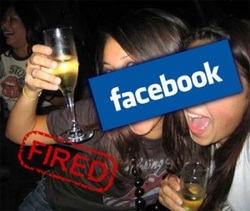
All of these events have us talking about fairness and when a personal indiscretion should cause you to lose your job, consider resignation or be denied a position (by the way, as of this time, it hasn’t been concluded that Petraeus’ affair lead to confidential information being compromised). It’s been widely reported that employers and college admission counselors are now taking advantage of social media and browsing what they can of candidate profiles before making a decision. This is absolute crap to me. I have so many issues with this practice. First, let me say I find a lot of things about the traditional interview process discriminatory and unfair (for example, the over-emphasis on appearance. Not everyone can afford nice dress-wear, but they might be able to do a job well). Assessing a candidate based on their Facebook or Twitter page opens all kinds of doors for discrimination, not to mention it’s an infringement of privacy (are they going to ask for personal diaries or talk to our priests next?). If job-seekers are regularly discriminated against in the traditional process with laws in place, imagine the rate of prejudice when social media is factored in. Who’s to say that an employer won’t disqualify a job-seeker simply because they have opposite political views or over something petty like being a fan of Britney Spears? It might be over an unsavory status or suggestive picture, but how do we formally and fairly define “unsavory” and “suggestive” and how it correlates to the job position? Formal background checks, job references, resumes and interviews should tell you all you need to know about a candidate’s ability to perform a task well. Whether they hit the gay bar last week has nothing to do with it.
The reality of it is if everyone was denied a job for personal gaffes, no one would have work. My stance is that if one’s missteps or personal choices doesn’t harm anyone or literally damage an establishment or company, they should be able to get and keep a job. Thoughts?
 Film poster Not long ago, one of my guy friends complained that women “have too many issues with themselves and how they look.” One of my female friends argued that men aren’t as emotional as we are. I call poppycock on both of these ideas. It’s a stereotype that women have more self-esteem issues and are more emotional than men. Women’s image and self-esteem issues tend to be at the forefront because of how intensely women are objectified and sexually exploited, particularly in the media. Additionally, the desire to meet resulting, unreasonable beauty standards sometimes leads to extreme behaviors, like eating disorders. Women are viewed as more “sensitive” and likely to cry and openly discuss their feelings, so it’s assumed their driven by emotions and more fragile. The truth is that men struggle with self-esteem as well and are equally emotional; it just shows up in a different way.
In American culture, a man must be attractive, have sexual prowess or a large penis, strength and substantial income (comes from the paradigm that men are the “providers”) to have “value.” Should a man fail to meet any of these expectations, he feels less than or is criticized. We won’t talk about this candidly because men are supposed be invincible and can’t possibly have a shaky self-concept, which brings me to emotions. Again, men are expected to be pillars of constant strength, therefore the only emotion socially acceptable for them to express is anger. By the way, anger IS an emotion. If a woman bawls her eyes out, she’s weak and “emotional,” but if a man punches a hole in the wall, he’s just angry. What a contradictory double standard. Anyhow, being limited to anger leads to covert, sometimes passive-aggressive expression, like withdrawal or avoidance. Being controlling, possessive, jealous or manipulative, cheating to meet needs or having resentment from a bruised ego are all examples of emotionally-motivated behavior. Thoughts and feelings aren’t sexist and don’t discriminate.
 A 20-week old fetus. By C. Dyer, contributing writerNote: This article is in response to a piece written by J.Says, entitled "Women's Rights: More Than Just Abortion."According to many early feminists, abortion reflects not female empowerment, but a society in which being male is still the ideal. Rather than appreciating things that are uniquely female and powerful, like the ability to bear a child, society asserts that women must become like men in form and function to receive respect. Men still find social advancement easier than women who want to be mothers. This reality was reflected in President Obama's statement that Roe v. Wade allowed "our daughters [to] have the same rights, freedoms, and opportunities as our sons to fulfill their dreams." Abortion has done no more to resolve the problems of sexism than heavy makeup does to resolve racism. Financial success is still revered more than motherhood, as though moving up in the corporate world were more important than shaping the next generation. "When we consider that women are treated as property, it is degrading for women to treat their children as property, to be disposed of as they see fit."-feminist Elizabeth Cady Stanton (1873)The concept of children as property is an ancient idea we never fully abandoned. Child abuse first gained national attention in the late 1800's. The ownership of one's children was considered so personal and private, there wasn't even an institution for the prevention of child abuse. In fact, the first prosecuted child abuse case in the U.S. was brought by the Society for the Prevention of Cruelty to Animals. In many ways, we continue this tradition today. Many liberal Democrats would consider it cruel to shoot a cat or dog that inconveniences them, but would accept a woman's right to abort for the same reason. Two of the major questions in the abortion argument are "when does life begin to matter?" and "how far do abortion rights extend?" Catholics and other religious groups might contend that value begins at conception. Some atheists and pro-choice advocates believe it matters when the entity develops a self-concept. Both ideas are difficult to prove. Because of this, scientists choose different measures. Recently, many states have outlawed abortions occurring after 22 weeks because of ample scientific evidence that a fetus of that age can feel and react to pain. Even the federal government was willing to recognize some limits on abortion by upholding a partial-birth abortion ban. Most people, regardless of political affiliation, would concede that abortions past the point of viability are unethical. A layer of tissue is the only difference between an infant born a month early and an 8 month old fetus. To allow the abortion of an 8 month fetus would make opposition to infanticide seem hypocritical. The question of viability has been used by some to extend the abortion argument to young infants. There was a recent article in the Journal of Medical Ethics entitled "After-birth abortion: why should the baby live?" The authors received death-threats for their publication, but it raises some valid points. It argues that parents should have the option to "abort" their infant if they discover disabilities that medical exams didn't show. Many of the arguments for or against adoption in such a case would still hold true.
 Wasilla victims are charged for kits. Click photo to find out more. According to statistics, most sexual assaults go unreported for a bevy of reasons (including feelings of shame, fear and intimidation). For victims who indeed report the crimes against them, many experience what is often described in media and research articles as “re-victimization” by their social world (ex. judgment, disrespect) and the legal system (ex. police mistreatment, perpetrators being given short sentences, defense lawyers using sexual history to imply consensual sex); as if the physical and emotional trauma of the event weren’t enough. Adding on to the offenses and failures of the legal system is the mishandling of “rape kits.” A routine part of assault investigation, a rape kit is an intrusive, but necessary, physical examination of the victim to collect DNA. 1 examination can take up to 6 hours to complete. Analyzation of the rape kit can help identify the perpetrator; identification is particularly easy if the assailant has other documented crimes. Across the country, however, many kits go untested. The city of Detroit made news for its high-rate of backlogs when prosecutor Kym Worthy launched the 400 Project to help raise testing funds. Testing costs can range from $1200-$1500; many crime labs and law enforcement entities purport that they don’t have the resources or access to advanced technology to run the tests in a timely, efficient manner. Some sociological studies imply that gender politics and a nonchalant attitude about sexual violence influence law enforcement’s passive response. There are complicated consequences when kits are neglected. If a kit is analyzed beyond the “statute of limitations” (the time frame in which you can prosecute someone for a crime) the assailant cannot be charged, regardless of the fact that the victim had nothing to do with the testing delay. In some cases, perpetrators go on to rape countless other victims undetected. According to EndTheBacklog.org, rape has the low arrest rate of just 24%. Visit EndTheBacklog.org to learn more about this issue and what you can do as a citizen to combat it. Also available on the site is resource information for victims. To read more about Detroit’s fight and other advocacy/fund programs, click here.
Or at least some of the reasons, anyway. Pop-star Jordin Sparks (American Idol 6, “Sparkle”) made it public that she was taking a vow of chastity and waiting until marriage to have sex, but in an interview earlier this year, the singer seemed to have a change of heart, saying: "I don't wear it [purity ring] exactly everyday anymore, but I always have something there. When I was 13, my mom spoke to me about purity and waiting for marriage…at the time I was like, 'Sure that's great,' but I can't say what's gonna happen a couple of months from now. People grow." It looks like Sparks may be joining the club of starlets (ex. Britney Spears) who took a pledge of abstinence in youth and later made a different choice. There are a number of different reasons why abstinence pledges are reneged on, but 2 factors are age and motivation for the pledge.
Across the country, religious (many faiths discourage pre-marital sex; it’s viewed as a sin) and some school-based organizations have abstinence programs in which pre-teens and teenagers take formal oaths to remain chaste until marriage and/or don a symbolic ‘purity ring.’ It’s my personal theory that teenagers, especially in this day and age, are too young and immature to take such a vow. 1st, teenagers, individuals who are completely supported by others and viewed as children by the law, should not be having sex either way, but that’s a different conversation. 2nd, you set a young person up for failure when you ask them to make a decision that’s going to affect their adult life. At 13, 14 or 15, you’re being asked to make a decision that will affect you when you’re 23, 24 or 25? That’s unreasonable. That’s partially why so many college students have difficulty choosing or sticking with an academic major. At 18, you’re making a career decision for the REST OF YOUR LIFE? Considering that most high school students don’t have any in-depth preliminary help discovering what career fields might be of interest to them and what’s required to successfully attain employment, making that choice at 18 seems particularly ridiculous. There’s nothing wrong with explaining the benefits of abstinence to young people or promoting the concept, but encouraging them to make a public declaration that they may be shamed internally or externally for breaking later may be the wrong approach. One’s motive for chastity is a strong predictor of whether or not that person succeeds in keeping their pants on. Growing up in a fairly conservative Christian environment, I noticed the people who had additional reasons besides religion for waiting until marriage to have sex were the most successful in abstaining. In anything, most people need a strong interest or personal motivation to succeed. Motives affect effort and focus. Not doing something simply because an authority (in this case, God) told you not to is simply not good enough, principally when it doesn’t appear that there’s immediate consequences for disobeying the authority. For me, I don’t like the idea of multiple people being able to say they’ve had sex with me and they know what it looks like, smells like and tastes like. You can’t get any more intimate with a person than sex; I’m sharing and revealing a very personal side of myself. It isn’t just a way to a great orgasm; it’s a spiritual bonding act. Therefore, I’m keeping my cookies in the cookie jar until I get married. If you’re not good enough to marry, you’re not good enough to have my body. God could send me a burning bush (a reference from the story of Moses in the old testament of the bible) saying I could have pre-marital sex tomorrow and I would still wait. That’s just me. While I’m on the subject of youth, Christianity and chastity, in some communities of faith, teens are almost taught to not even think about or discuss sex until marriage. You can’t effectively curb or control your sexual desires if you don’t understand what your triggers and weaknesses are. If one is sexually suppressed, they’ll likely struggle to handle being confronted with sex or a tempting situation. There are healthy, productive and safe ways to explore, discuss and learn about your sexual energy WITHOUT having sex. Youth ministers need to create an atmosphere for honest and open dialogue if they expect their horny teen parishioners to keep their “V-cards.” As for Jordin Sparks…it’s always disappointing when a public figure decides (or in this case, contemplates) to renounce a chastity vow because I feel it feeds the notion and stereotype that abstinence promises are ones to be broken or are impossible to keep. When she mentioned her initial reaction to chastity at 13 and compared it to now with “people grow,” it implied that abstinence is like Trix cereal: it’s for kids and when you mature and “grow,” you don’t do it. This is going to sound harsh, but let’s be real- unless you have a new set of religious views or found your reasons for choosing abstinence shallow, deciding to have sex in your 20’s after being ‘pro-purity’ for 10 years ( so pro-purity she brought attention to herself by saying on national television at the 2008 MTV Video Music Awards: “It's not bad to wear a promise ring…because not everybody –guy or girl– wants to be a slut.") is not the result of “growth” or a philosophical epiphany, it’s because you want to have sex. Assuming Sparks’ new “revelation” comes as she’s been dating singer Jason Derulo since late last year, I shake my head at the thought that all it took was for her to be sprung on a guy to dump a long-held belief.
|